
Economic Value Accounting
Make the economic engine
of your business visible .
so you can scale, raise, or exit without surprises.
You Can’t Control
What You Can’t See
When your financial system only shows snapshots, not triggers, growth decisions feel risky and funding conversations turn defensive.

Invisible Economic Model
Your books show totals, not how money is actually made. Without unit-level visibility, profitable and unprofitable activity gets blended together hiding risk until it’s expensive.

Lagging Financial Signals
Traditional reports tell you what already happened. By the time problems appear in your P&L, the decisions that caused them are already locked in.

False Financial Clarity
Clean financials can still hide structural fragility. When reports lack causality, teams optimize the wrong things and capital prices in the uncertainty.
What’s at Stake When
You Can’t Explain the Numbers

Growth Feels Risky
When you can’t see what’s actually driving profit & cash, every growth decision feels like a gamble. You hesitate on hires, pricing, and spending.

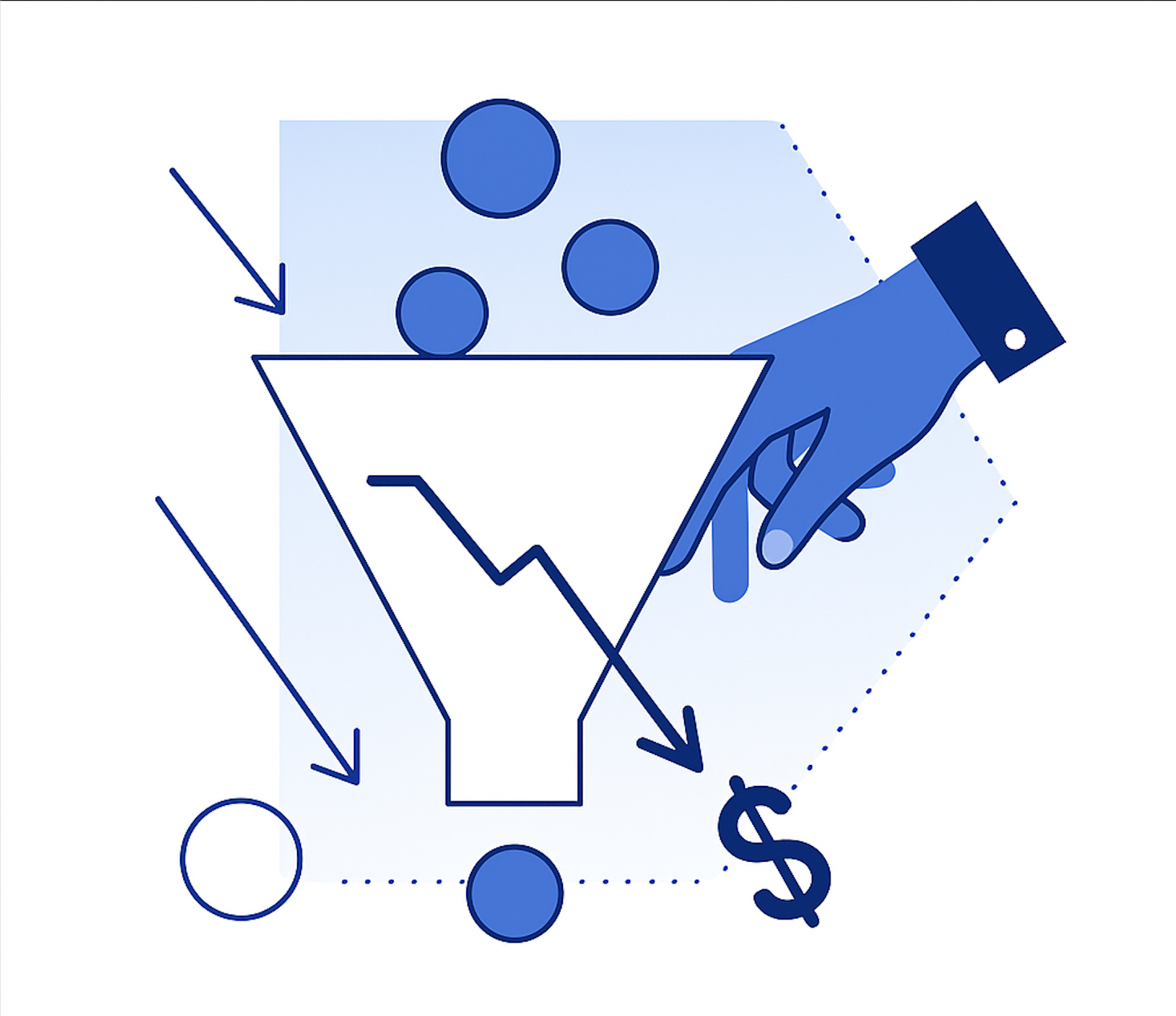
Margins Erode Quietly
Without unit-level visibility, inefficiencies hide inside growth. Revenue increases, but contribution shrinks and you only notice once pressure shows up in cash.
Decisions Slow Down
When the economics aren’t clear, decisions require more debate, more opinions, and more caution. Momentum stalls because the consequences aren’t measurable.
A Complete Economic Picture
When your economic engine is visible, you can predict outcomes, test decisions, and scale with confidence instead of hope.

Revenue, costs, and cash are organized to reflect real economic activity not just accounting categories.


Most Accounting Teams Aren’t Built
to Explain How Your Business
Actually Creates Value
Your finance team needs more than accounting knowledge.
They need to understand how decisions turn into outcomes inside your business.
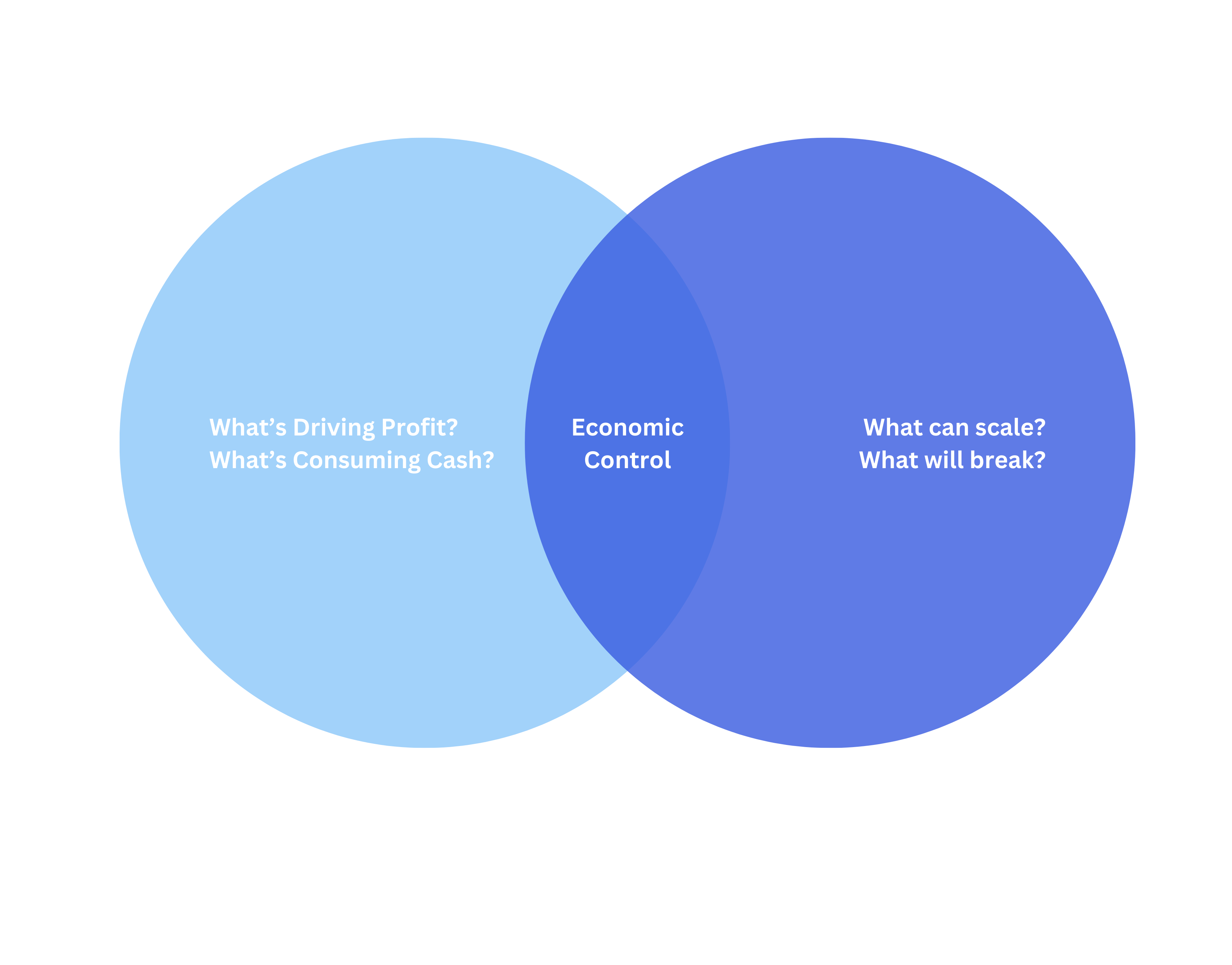
With Your Big Bank, you get advisors who understand how your financials reflect the economic engine of your business so growth decisions are based on cause and effect, not guesswork.
Traditional
Accounting
.svg)
Accurate Reports
Historical results
Compliance
Confidence
Economic Value
Accouinting
Decision Ready insights
Unit Level Visibility
Predictable Outcomes
Meet The Founder
I started using Economic Value Accounting after repeatedly seeing growing businesses make the right moves: hiring, investing, expanding. The did all these things without clear insight into what was actually working or holding them back. Revenue increased, but the economics stayed unclear. Founders could see results, not the system producing them. That lack of visibility made growth feel risky and allowed inefficiencies to compound. My goal is to make the economic engine visible, showing clear cause and effect between decisions, profit, cash, and risk so growth becomes deliberate instead of reactive.
~Ousmane Toure




Build Economic Visibility
Before Growth Creates Risk.
We install a financial system that shows cause and effect, so you can scale, invest, and decide with confidence.
How Economic Value Accounting Works

Foundation - Make the Business Measurable
Decision Oriented Accounting
Most accounting systems are built for compliance, not understanding.
We restructure your financial data around how your business actually operates.
This organizes revenue, costs, and cash so economic activity is measurable, not just recorded. Which creates the foundation for seeing what’s working, what isn’t, and where complexity is hiding risk.
Visibility - Turn Numbers Into Insight
Trustworthy Financials
Clean numbers matter, but clarity matters more. We reconcile, validate, and standardize your financials so they’re internally trusted and externally defensible. When numbers hold up under scrutiny, teams stop debating the data and start making decisions faster.


Control - Forecast Outcomes Before You Commit
Forecasting & Decision Support
With cause and effect visible, forecasts become directional instead of aspirational. You can see how growth decisions affect margin, cash, and risk before committing, allowing you to scale deliberately instead of reacting after the fact.This is where visibility turns into control.
Case Study
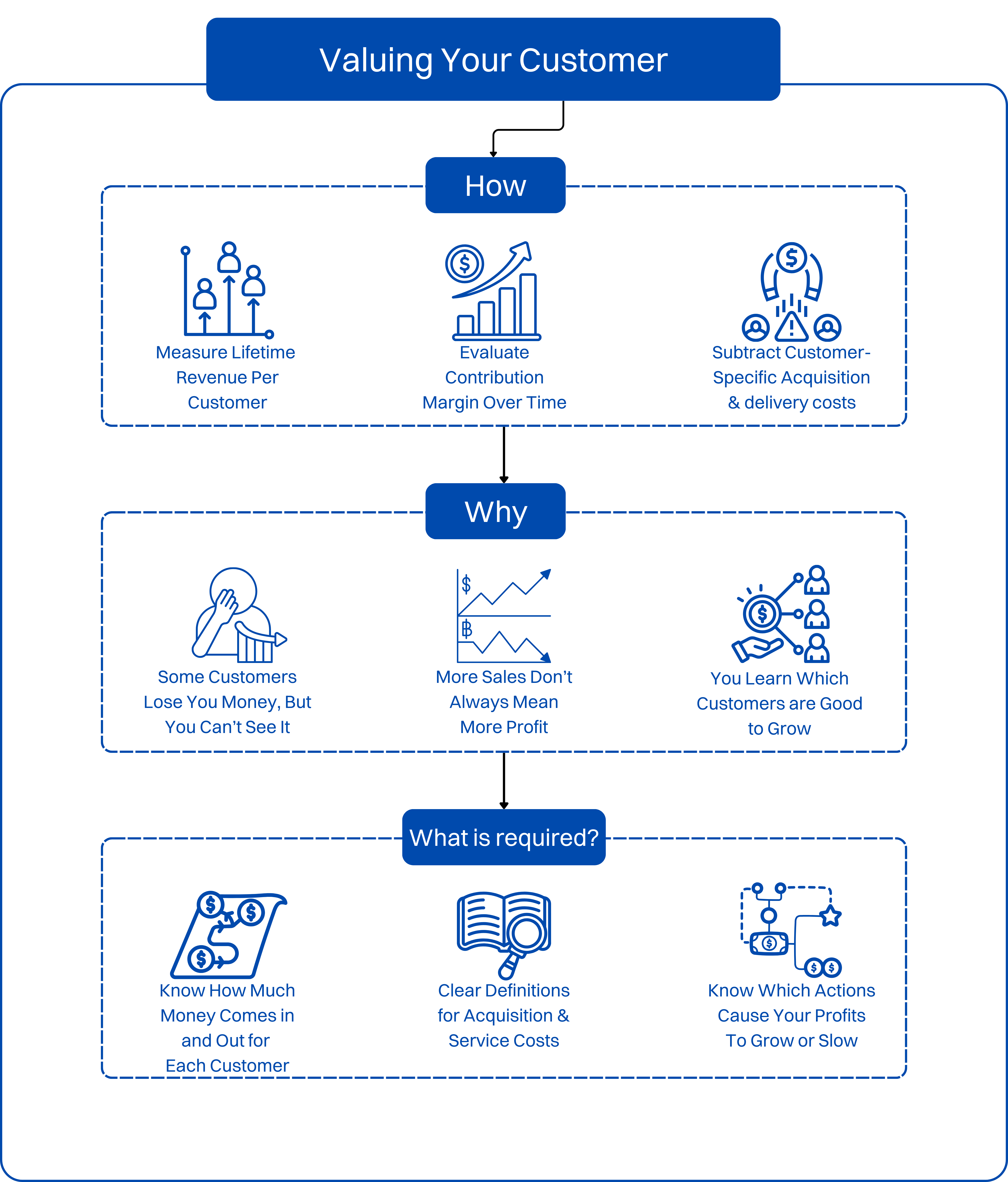
A growing 3PL was adding customers rapidly and celebrating strong top-line growth. Volume was up, new contracts were closing, and operations were expanding but cash pressure kept increasing. Revenue and customer count were growing together, yet profitability wasn’t. The problem wasn’t demand. It was visibility. The business had no clear view into unit economics by customer. Some accounts generated healthy contribution margins, while others quietly operated at a loss. Because everything was blended together, unprofitable customers were subsidized by profitable ones, masking the real drivers of performance and creating false confidence in growth. We installed an Economic Value Accounting framework to make unit-level economics visible. Revenue, fulfillment costs, and operating overhead were mapped to individual customers and service profiles. This revealed which accounts created value, which destroyed it, and why. With cause and effect visible, the company was able to reprice, restructure contracts, and focus growth on customers that actually compounded profit turning volume into sustainable performance.
Answer to some questions we get often
What if I’m not planning to sell my business anytime soon?
That’s exactly when this work matters most. Economic visibility isn’t about selling it’s about understanding what’s actually driving profit, cash, and risk so you can scale with confidence. If you ever do raise capital or exit, you’ll already be prepared.
How is this different from what my bookkeeper or CPA already does?
Traditional accounting focuses on accuracy and compliance. We focus on cause and effect. We restructure your financial system so you can see which decisions, customers, and activities create value and which ones quietly destroy it.
Do I need to be GAAP-compliant for this to be useful?
GAAP compliance helps with trust, but it’s not the primary goal of economic value accouting. The real value comes from organizing your numbers around how the business actually operates, so decisions become measurable and repeatable not reactive.
What kinds of businesses is this best suited for?
This is designed for growth-stage businesses where complexity is increasing more customers, more spend, more people, more decisions. If revenue is growing but clarity isn’t, this system is a strong fit.
How long does it take to see value from this?
Most clients gain meaningful visibility within the first 30–60 days. As the system matures, it becomes a permanent decision-support layer that improves forecasting, prioritization, and confidence over time.
Will this slow my team down or add reporting overhead?
No. The goal is the opposite. By creating a shared economic truth, teams spend less time debating numbers and more time making decisions. The system simplifies conversations instead of adding complexity.
What if I don’t have clean data to start with?
That’s normal. We start with what’s available and improve visibility iteratively. You don’t need perfect data, you need a structure that makes improvement possible and prevents blind spots from compounding. It also helps that we happend to be accountants that can help you clean up your books :)
How does this help with pricing, hiring, or growth decisions?
By making unit economics visible. You can see how changes in pricing, headcount, or spend affect margin and cash before committing not months later when the outcome is already locked in.
How involved do I need to be as the founder?
We handle the heavy lifting. Your role is to provide context and make decisions based on the insights. The system is designed to reduce founder burden, not increase it.
What’s if i'm not ready right now?
Growth without visibility feels fine, until it doesn’t. Without a clear economic engine, risk accumulates quietly, margins erode, and decisions slow down. This work turns growth from a leap of faith into a controlled process.

This website is not part of the YouTube, Google, or Facebook website; Google Inc or Facebook Inc.
Also, this website is NOT endorsed by YouTube, Google or Facebook in any way. FACEBOOK is a trademark of FACEBOOK Inc. YOUTUBE is a trademark of GOOGLE Inc.
All material is intellectual property and protected by copyright. Any duplication, reproduction, or distribution is strictly prohibited. Please see our Full Disclosure for important details. Statements and depictions are the opinions, findings, or experiences of individuals who generally have purchased our product and training. Results vary, are not typical, and rely on individual effort, time, and skill, as well as unknown conditions and other factors. We do not measure earnings or financial performance. Instead, we track satisfaction of services by voluntary surveys. Results shown are from people who have appropriately used our products. We use cookies to help improve, promote and protect our services.By continuing to use this site, you agree to our privacy policy and terms of use.
This site is not a part of Facebook website or Facebook, Inc.This site is NOT endorsed by Facebook in any way. FACEBOOK is a trademark of FACEBOOK, Inc.